Guest CRM
A multi-tenant RSVP and seating tool, designed for people who check it on their phone between two calls.
- role
Discovery with clients
Product design
UI & design system
Front-end & back-end
- tools
- FigmaJavaScriptVitePHPMySQLGoogle Apps Script
( overview )
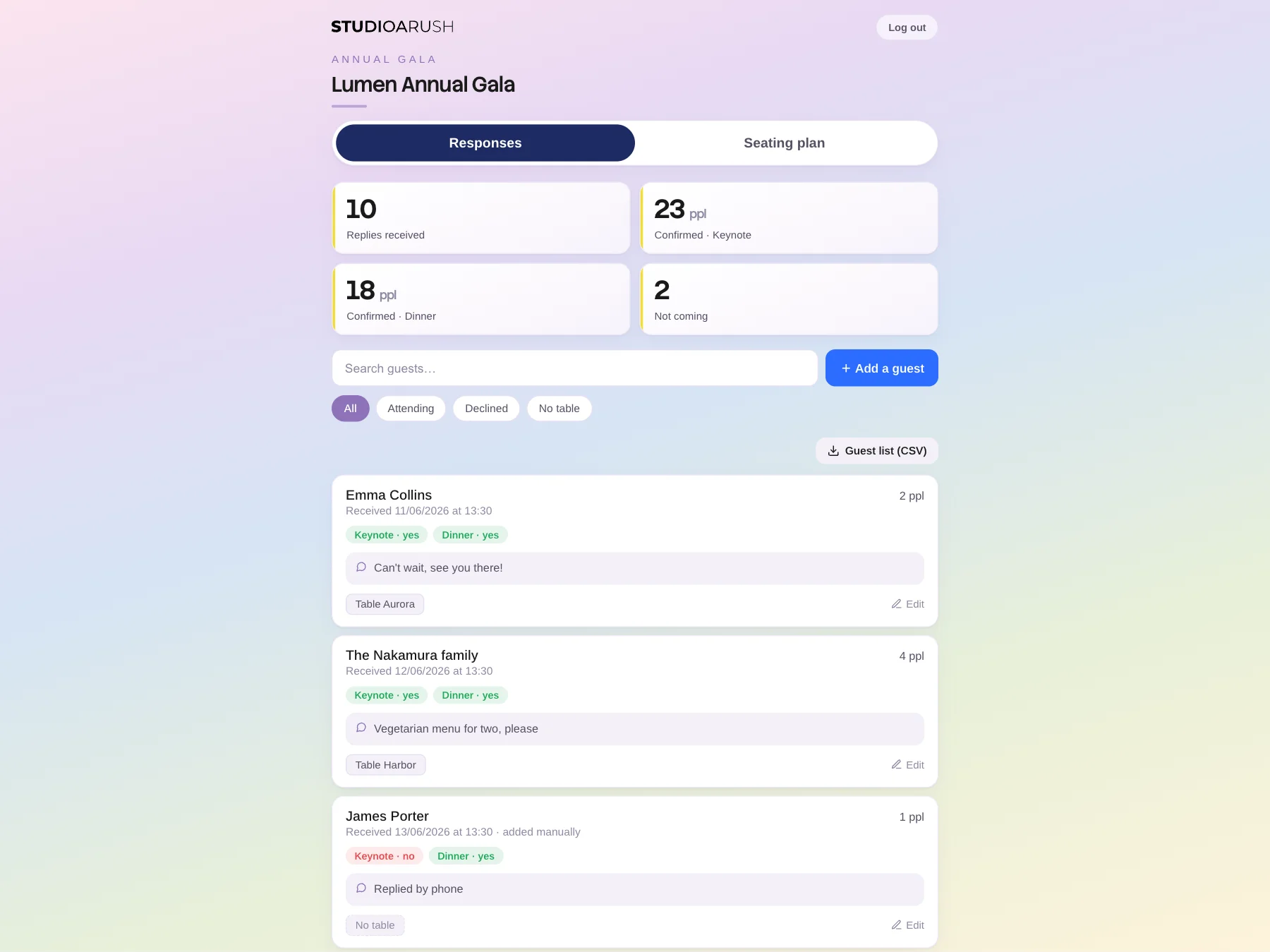
My studio's clients kept asking the same three questions: who replied, who hasn't, and where do we seat everyone? Spreadsheets and message threads weren't cutting it. I scoped a small SaaS for it, designed the product and shipped it, with a dashboard, a public RSVP form, a seating plan and an access model with no accounts to create.
( the problem )
Users are not power users. They open the dashboard on their phone, between two calls, to answer one question: how many are we? The product had to be readable in seconds, work without an account, keep every client's data isolated, and plug into any event site.
( discovery )
Three questions, asked every week
Before designing, I listed what clients were already asking me by message.
“How many are we?”
A headcount for each part of the event, at a glance.
“Who hasn't answered?”
Filters by status, and search that forgives typos and accents.
“Where do we seat them?”
The same guest list, turned into tables without typing it again.
“I don't want another password.”
Access had to be a simple code they receive once.
( responses )
Answer first, details second
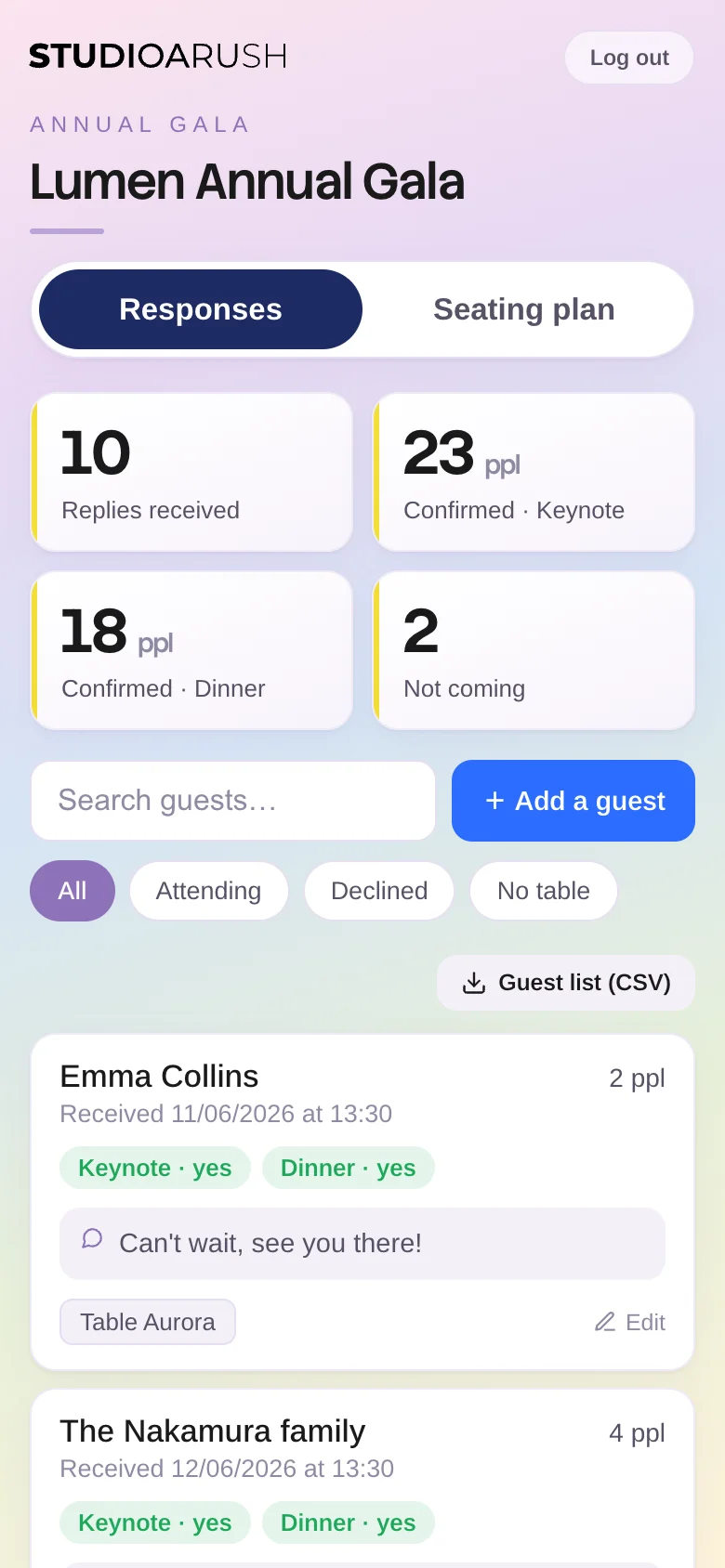
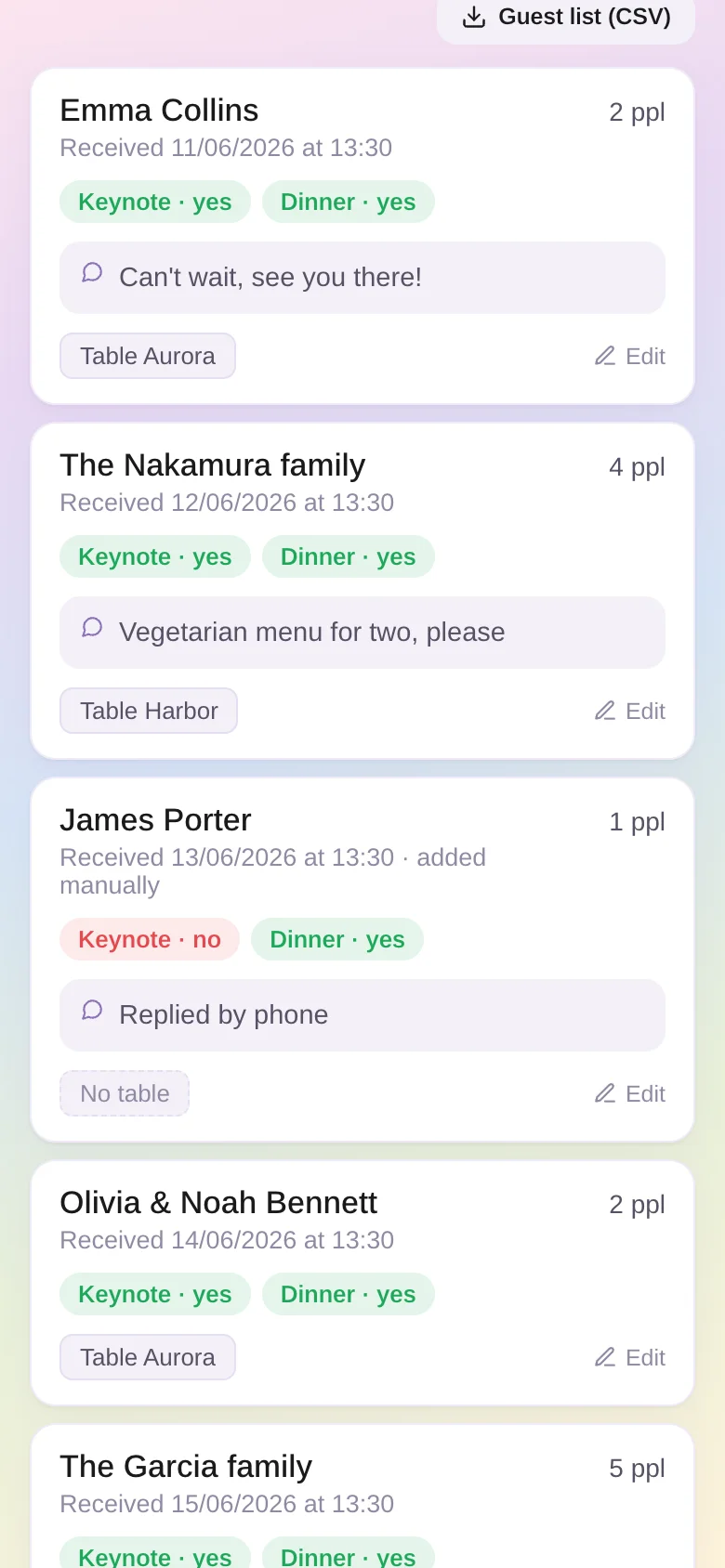
The home view leads with the four numbers clients ask about. Below, each guest is one card: replies per part of the event, party size, and the message they left. Tapping a card opens it for editing in a bottom sheet.
- Filters: all, attending, declined, no table
- Search and add a guest in the same row
- CSV export for whoever lives in spreadsheets
( seating )
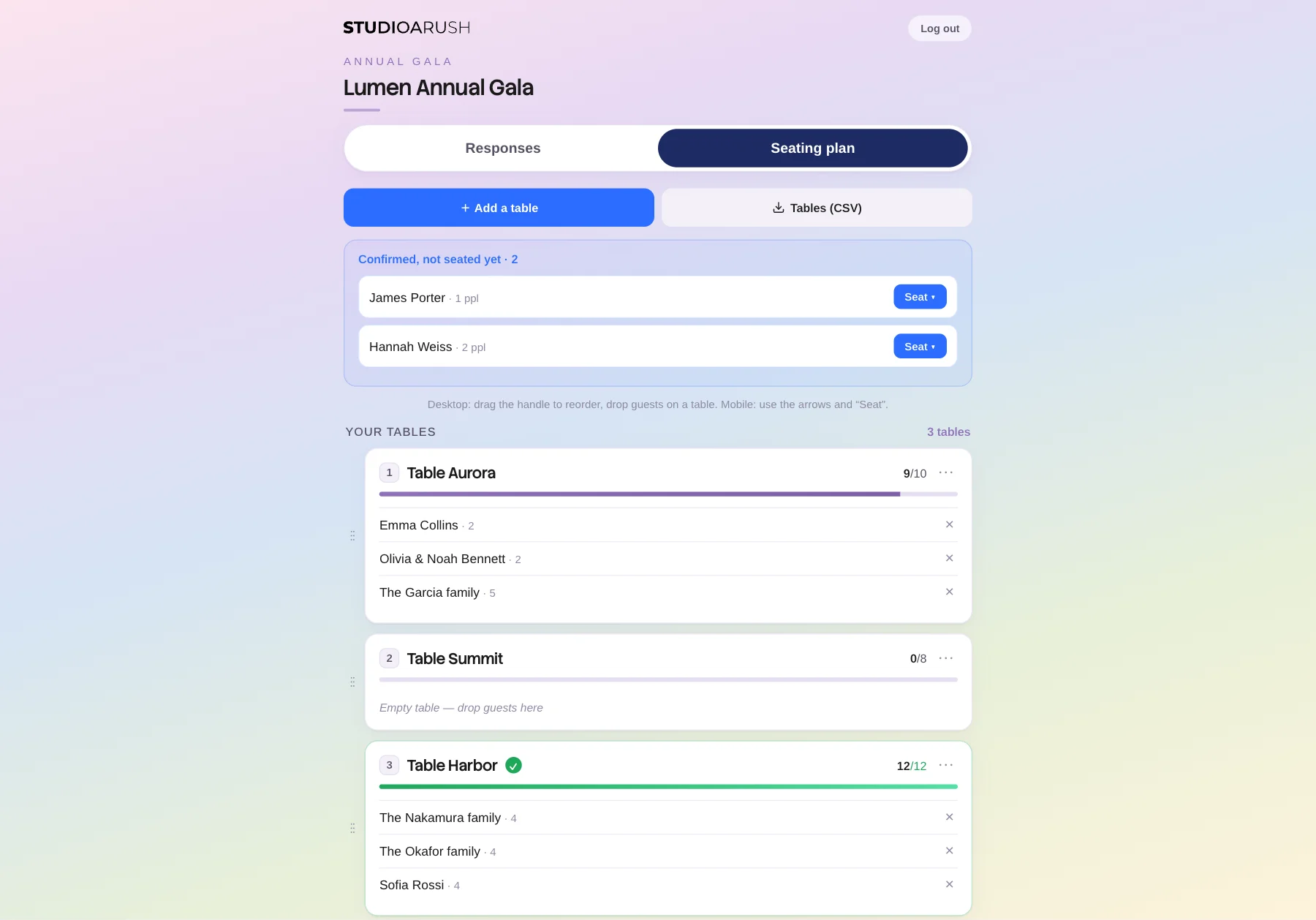
Seating lives right next to the answers
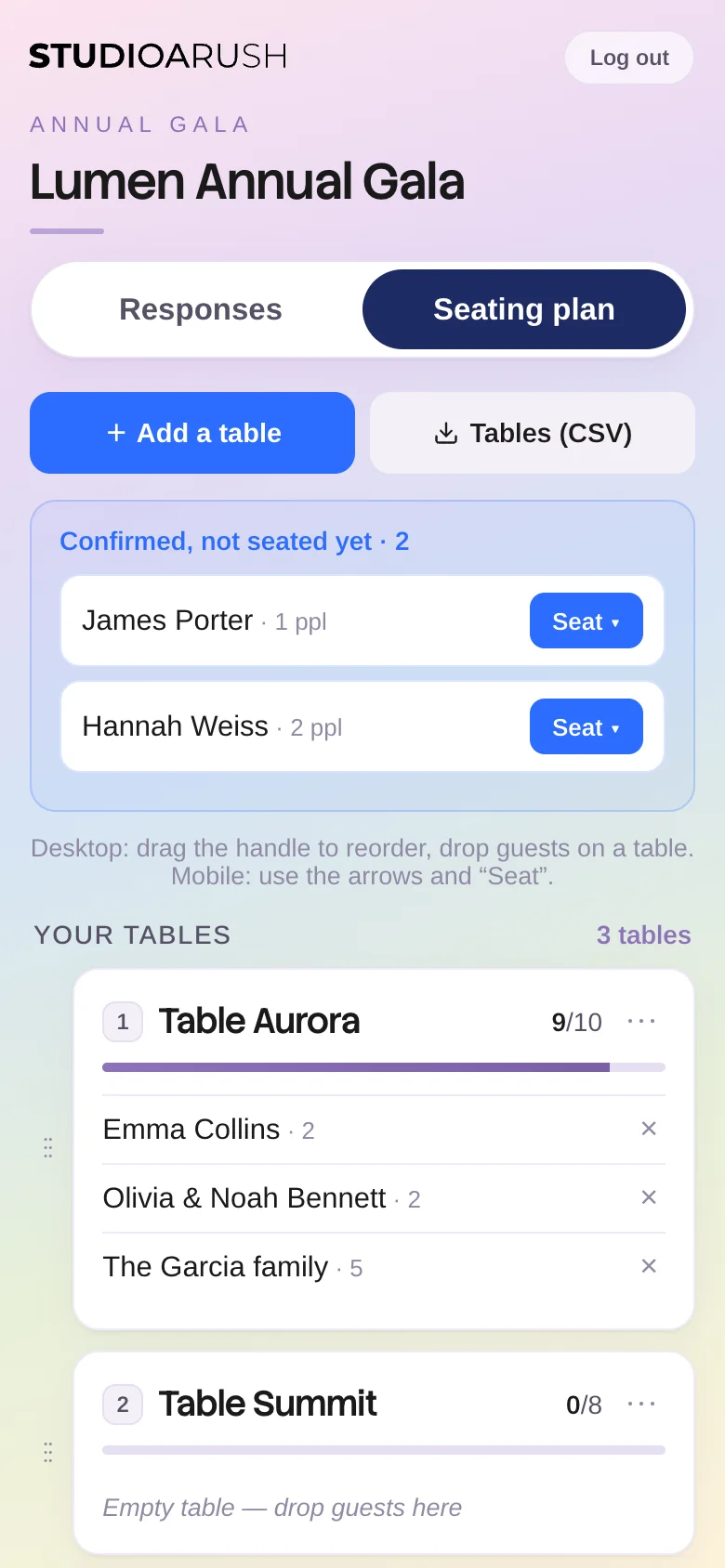
Confirmed guests who don't have a seat yet wait at the top. On desktop they're dragged onto a table, and on mobile a “Seat” button lists only the tables with room for the whole party.
- Capacity bar and a check when a table is full
- Over-capacity warning instead of a silent overflow
- Tables can be renamed, resized and reordered
key decisions.
One access code, no accounts
Each client gets a readable code. It's exchanged for a signed token, and every query is scoped to that client on the server, so no data ever crosses between events.
Built once, embedded anywhere
The dashboard compiles to a single file. A few lines of embed code load it on any event site, and a demo mode runs on sample data for sales calls.
A live sheet for the spreadsheet person
Responses and tables mirror to a Google Sheet, so the one stakeholder who won't open a dashboard still has the numbers.
Bilingual by default
Names in any script display in the right direction, so a list can mix left-to-right and right-to-left without breaking.
( ux problems solved )
Small frictions that would have stopped a busy client
Clients forget passwords and won't create an account for a one-off event.
→A readable access code, sent once, exchanged for a secure session.
A family of five can't be split across two tables, but a plain dropdown lets you try.
→The “Seat” menu only lists the tables that have room for the whole party.
Names typed with or without accents couldn't be found.
→Search ignores accents and case, so “Elie” finds “Élie”.
A guest list mixes French and Hebrew names, which broke the layout.
→Each name is displayed in its own reading direction, automatically.
outcome
- In production with clients
- One codebase serving every client, with a shared public RSVP form
- Scoped, designed and shipped by one designer
( contact )
let's make it
clear.
Available for freelance projects and full-time roles
Freelance product design, UI/UX and brand projects, from a single flow to a full product, and full-time product design roles in UI/UX, design systems and AI-assisted product teams. Tel Aviv area or remote.